
Accent Wall Panels in Florida Humidity: What Holds Up (2026)
Accent wall panels in Florida humidity: which finishes survive, where condensation and mold strike first, and the checks to run before you panel.
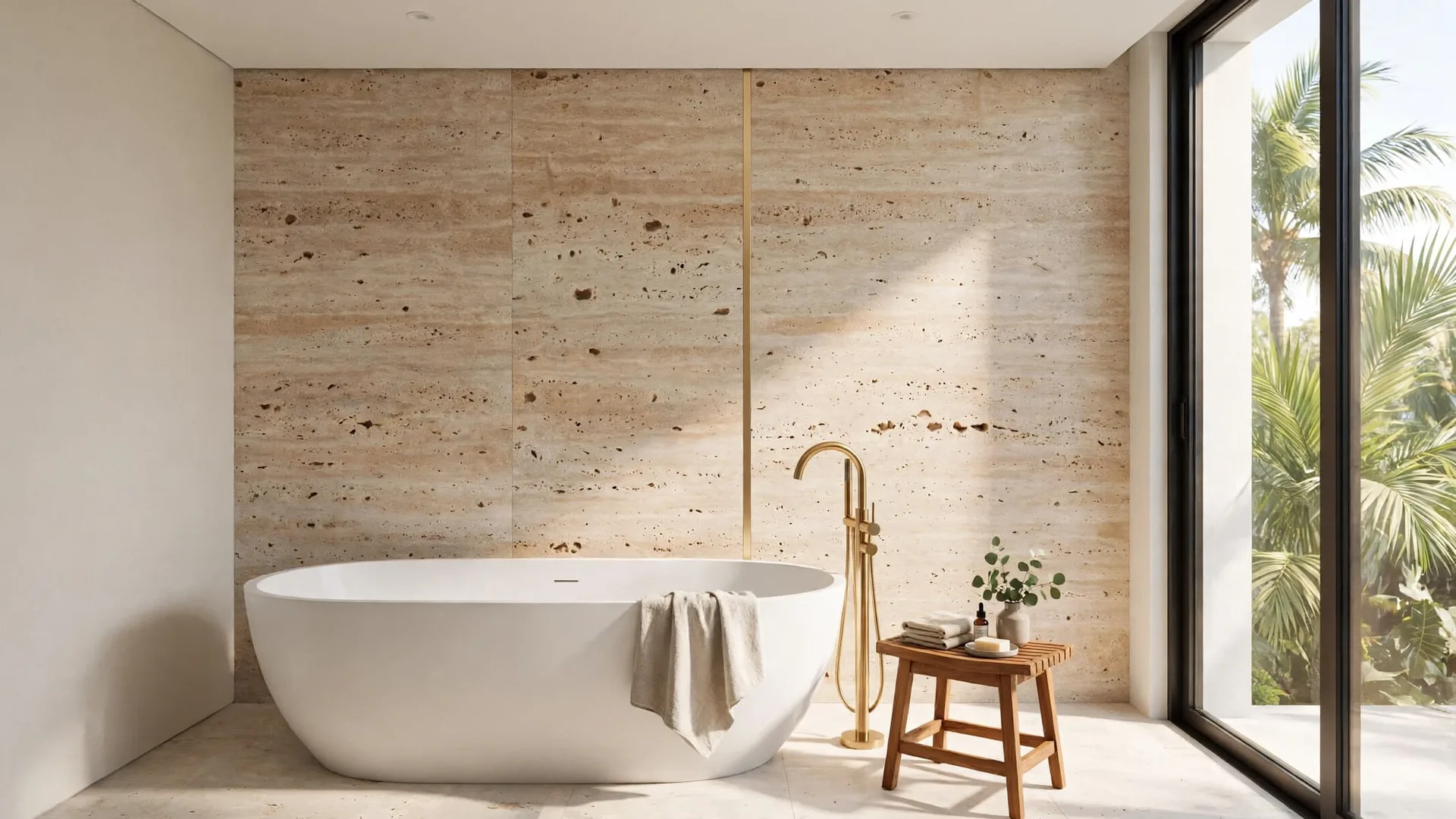
An accent wall fails in Florida in a quiet way. The face can look perfect for two summers. Behind it, the wall stays damp, the seams swell a fraction, and a musty smell starts near the floor line. By the time a stain shows, the problem has been growing in a place nobody could see. Humidity damage is a hidden problem first and a visible problem last.
We are a South Florida studio that designs and installs large-format panel walls. Our main guide to accent wall panels covers which wall to choose, which material family fits, and what a project costs. This guide takes one narrower question. It covers what Florida air does to a single feature wall, and how you choose, place and care for panels so the wall survives it. Our separate comparison of wall panels in Florida humidity: MDF vs PVC covers the general material duel for all panels. This article stays on accent walls: their walls, their rooms and their failure points.
Florida humidity, in numbers an accent wall feels
TL;DR: Outdoor air in South Florida runs far above the indoor line that keeps mold away. Miami averages 82 percent relative humidity in the morning and 61 percent in the afternoon across the year (Florida Climate Center). The EPA indoor target is below 60 percent, ideally 30 to 50 percent. Your air conditioner holds that gap, and your accent wall lives inside it.
Relative humidity (RH, the share of moisture in air versus the most that air can hold) swings across a Florida day. The Florida Climate Center publishes morning and afternoon averages, with data from the National Centers for Environmental Information. Its first lesson is timing. Maximum values usually occur during morning hours. Miami, over 71 years of record, averages 84 percent on January mornings and 59 percent on January afternoons. By September the same city averages 86 percent in the morning and 66 percent in the afternoon. West Palm Beach tracks Miami closely, with the same annual pattern of 82 percent mornings and 61 percent afternoons.
Dew point tells the second half of the story. Dew point is the temperature where air turns saturated and water starts to condense on cooler surfaces. The Climate Center humidity explainer, written by the state climatologist team, puts summer dew points at 65 to 75 degrees across Florida. A typical summer day carries a dew point around 70 degrees. That number matters indoors. Any surface in your home that sits below the dew point of the air touching it can collect water. Air conditioning cools wall surfaces all summer long.
Against that outdoor load, the indoor target is strict. The US Environmental Protection Agency (EPA) mold course states the line plainly in numbers. Indoor relative humidity should be kept below 60 percent. The ideal band is 30 to 50 percent, if possible. Building Science Corporation gives the same ceiling for hot-humid climates in its moisture digest BSD-012. It advises limiting indoor moisture to 60 percent relative humidity at 75 degrees, using dehumidification, air conditioning and source control.
So a Florida accent wall lives between two climates. Outside the glass, morning air sits in the mid-80s for humidity. Inside, a working cooling system holds the room near 50 percent. The wall assembly sits at the border. Every door opening, shower and AC pause lets the outdoor climate lean on the indoor one. Material choice decides how much leaning your feature wall can take.
The four ways humid air attacks a feature wall
TL;DR: Humid air reaches an accent wall through four routes. Room air loads the panel face and edges with moisture. Cooled exterior walls collect condensation behind the panels. Still air behind a panel run lets that moisture linger and feed mold. Near the coast, salt rides the same air and attacks metal inlays, trims and fasteners.
Route one: the room air itself. The EPA mold course makes a point that surprises many owners. Humidity or dampness in the air can supply enough moisture for mold growth, with no leak at all. The course lists high humidity, at 60 percent relative humidity, as a common moisture problem on its own. A panel face breathes the room. Wood-based faces and cores take up moisture from that air and give some of it back as the room dries. The cycle repeats daily, and some materials keep a share of every gain.
Route two: condensation on a cooled wall. Air conditioning chills the inside face of an exterior wall. Warm, humid air that reaches that cold zone can drop its water there. The EPA describes the mechanism in one line. When warm, humid air contacts a cold surface, condensation may form. Building Science Corporation adds the accent wall detail. In hot-humid climates, interior mold grows because interior surfaces are cold and meet moisture levels that are too high. An exterior feature wall is the coldest decorated surface in many Florida rooms.
Route three: still, hidden air behind the panels. A panel run covers the wall and slows air movement against it. Moisture that reaches the covered zone dries slowly there. Drywall paper, wood fiber and dust in that zone give mold its food. The growth stays hidden until smell or staining reaches the room. The next two sections cover this route in full, because it decides most accent wall failures.
Route four: salt in coastal air. Within a few miles of the ocean, the air carries salt aerosol (fine salt carried on the breeze). A coastal builder guide describes what that salt does. It settles on surfaces, dissolves in humidity, and forms an electrolyte that drives electrochemical attack on metals. On an accent wall, the targets are metal inlay strips, edge trims, fasteners and light fittings. The panel face may age well while its bright metal lines spot and pit.
Condensation on exterior walls: the accent wall trap
TL;DR: The riskiest accent wall in Florida is an exterior wall cooled by air conditioning. Humid air reaching the cold gypsum behind panels can condense there. Building Science Corporation warns that impermeable coverings trap that moisture against the board. Cold spots from supply vents aimed at the wall raise the risk further.
Start with the physics, stated plainly. Your AC cools the room air and the wall surfaces in it. The inside face of an exterior wall runs cooler than the room center. Outdoor heat and moisture push inward through that wall all summer. The vapor drive runs from the hot, wet side toward the cold, dry side. In Florida summer, the cold side is your decorated interior face. That reversal is why northern wall recipes fail here.
Building Science Corporation describes the failure in BSD-012. If exterior humid air contacts the cavity side of cooled interior gypsum board, mold and other growth can occur. Cooling that humid air against the cold board raises its relative humidity above 70 percent. That surface number is the growth line from the same digest. Mold needs relative humidity next to the surface above 70 percent, plus spores and food. Keep surface humidity below 70 percent and growth stays controlled.
The digest then names the covering problem, and it speaks directly to accent walls. Impermeable wall coverings make the condensation problem worse. Vinyl wallpaper is its example, because vinyl traps moisture between the finish and the gypsum board. The digest goes further for this climate zone. It states that vinyl interior wall coverings should never be used in this climate zone. The lesson transfers to panel selection. A low-permeance face (a face that blocks vapor) over a damp-prone exterior wall slows drying to the room. The wall needs a finish that tolerates the exposure and an install that starts from a dry wall.
Cold spots sharpen the risk on one part of the wall. BSD-012 describes how supply air creates them. Air blown against an interior surface through poor vent design or placement cools one patch of board. Humid room air touching that patch gives up water first there. In practice, the damp patch often sits high on the wall, near a ceiling vent. A panel run over that patch hides the early staining. Before you panel an exterior wall, note where the vents aim. A vent that washes your feature wall with cold air all day deserves a second look.
Three habits lower the condensation risk before any panel choice. Keep indoor humidity inside the EPA band, below 60 percent and near 50 percent where you can. Keep supply air from blasting one cold patch on the feature wall. Start panels only on a wall that tests and feels dry, a check we detail later in this guide. Panels decorate a wall. They cannot dry one.
Mold behind panels: how it starts and how you spot it
TL;DR: The EPA lists the back side of paneling among the common hidden mold sites. Growth behind an accent wall starts where moisture lingers: cold corners, damp gypsum and still air. The first signs reach the room as a musty smell, soft or swelling seams, and staining at the floor line.
The EPA mold course is blunt about hidden growth. It lists the places where moisture hides and mold follows. The list includes the back side of drywall, paneling and wallpaper. It also names a pattern every Florida owner should know. Mold is frequently found on walls in cold corners behind furniture where condensation forms. An accent wall combines both risks on one surface. It covers the board, and its corners and furniture sit in the coldest air in the room.
Mold itself needs little encouragement. The course states that mold can grow on virtually any organic material when moisture and oxygen are present. Drywall paper is organic. Wood fiber in panel cores is organic. Ordinary house dust is organic. Spores are already in every home. Moisture is the one factor the owner controls, which is why this whole guide returns to water.
Growth behind panels also hides well, and that shapes the warning signs. You rarely see the colony itself. You notice its exports. A musty or earthy smell that lives near one wall is the classic first sign. Swelling or softness at a seam or a bottom edge comes next in wood-based products. Paint blistering beside the panel run, or staining that creeps from the floor line, points the same way. Our guide to wall panel care, cleaning and repair covers the response steps once a sign appears.
Speed matters because the drying window is short. The EPA course sets it at 24 to 48 hours. Buildings and furnishings that get wet must be dried quickly, within that window, to avoid mold growth. Behind a closed panel run, a small plumbing leak or a wet cleaning spill can sit far past that window. The panel hides the wet zone from fans and from sight. That is the strongest argument for checking the wall before panels go up. It is also the strongest argument for acting on a new musty smell within days.
One boundary belongs here. This section explains mechanisms and signs, using EPA guidance. It does not diagnose your wall, and a large or long-standing growth area needs a licensed remediation professional. What we can say as installers is simple. A panel project on a wall with an active moisture problem repeats the problem behind a prettier face. Fix the water first. Then decorate.
Which accent finishes hold up, finish by finish
TL;DR: Closed, non-absorbent faces hold up best in Florida humidity. Flexible stone-look and bamboo composite sheets, porcelain and sealed stone looks tolerate conditioned rooms well. Standard MDF and veneer-over-MDF are the weak point, because fiberboard swelling does not reverse. Soft leather and velvet faces belong in dry, conditioned rooms only.
| Accent finish | Humidity behavior | Best Florida use | Watch-out |
|---|---|---|---|
| Flexible stone-look sheets (thin real stone layer on a flexible backing) | Closed stone face sheds room humidity; backing stays dry in conditioned rooms | Living rooms, bedrooms, TV walls | Keep out of shower wet zones; check the wall is dry first |
| Bamboo composite sheets with stone, marble or veneer looks | Stable composite core; face finishes vary by look | Feature walls in conditioned homes | Veneer-look faces still dislike standing damp at edges |
| Large-format porcelain | Near-zero water absorption; the wet-zone benchmark | Bathrooms, kitchen splash zones, entries | Weight and install skill; our shower panels vs tile comparison covers the duel |
| PVC and WPC boards (plastic and wood-plastic boards) | Waterproof core claims; seams and trims decide real performance | Utility-adjacent walls, rentals, kids rooms | Printed faces scratch; deep comparison lives in the MDF vs PVC guide |
| Veneer over MDF | Real wood face over a fiberboard core that drinks humid air | Dry, well-conditioned rooms with steady AC | Swelling at seams and bottom edges; see the warning below |
| Solid wood | Swelling largely reverses as wood dries | Conditioned rooms, owners who accept movement | Gaps and cupping across seasons; needs steady indoor humidity |
| Leather and velvet look panels | Soft faces hold dust and room moisture at the surface | Bedrooms and media rooms with steady AC | Keep off bathroom-adjacent and entry walls; vacuum care only |
| Metal inlays and trims | The metal itself resists humidity; salt air attacks the finish | Inland homes, any feature wall | Near the coast, ask for high-grade finishes; see the salt note below |
The MDF warning deserves its own paragraph, because so many accent products use that core. A peer-reviewed study in MDPI Polymers compared how materials recover after wetting. Its key line separates wood from board. Water-induced swelling is largely reversible for solid wood. For particleboards, fiberboards and compressed wood, the swelling does not reverse in the same way. A 2022 study in Materials and Structures reached the same end point. It found that irreversible swelling harms the look and the strength of MDF products. It also noted that MDF stays rare in humid settings, outside costlier modified products. In accent wall terms: a swelled seam stays swelled. Choose standard MDF for a dry, conditioned room, or step up to a modified board or a different core.
Where does our own studio product sit in this table? We install large-format composite sheets, 48 inches by 108 inches and 5 mm thick, with finishes that look like travertine, marble and stone, wood veneer, leather and velvet. The sheets go up whole, as full sheets from floor to ceiling. Fewer seams mean fewer raw edges drinking room air, which is the practical humidity edge of the format. Our travertine accent wall guide covers the stone-look family in depth. We rate the format honestly for conditioned living spaces. Inside a shower wet zone, we send clients to porcelain and tile, and the next section explains why.
The salt note for metal details comes from window and door testing, and we flag that origin openly. The Fenestration and Glazing Industry Alliance (FGIA) sets the high-performance finish classes for coastal aluminum. Trade reporting on those classes cites two test bars. The finishes pass 2,000 hours of cyclic corrosion testing. They also pass at least 10 years of exposure testing in south Florida. An accent wall inlay is a smaller job than a window frame. The question still transfers. Near the water, ask which finish class your metal strips and trims carry.
Room by room: entries, bedrooms and bathroom-adjacent walls
TL;DR: Interior walls in dry, conditioned rooms are the safe accent locations. Entry walls take a humidity blast at every door opening. Bedroom exterior walls collect condensation behind the bed. Walls shared with a shower carry the highest risk, and the wet side of that wall belongs to tile and porcelain.
Entry walls. The entry is the most opened wall in a Florida home. Each door opening trades a room of cooled air for outdoor air at morning humidity levels. In September, that incoming air averages 86 percent relative humidity in Miami mornings. The entry wall also takes wet umbrellas, rain-blown shoes and mopped floors at its base. Our entryway and hallway panel guide covers design for this wall. For humidity, choose a closed face, keep panels off the floor splash zone at the base, and watch the bottom edge after storm season.
Bedroom walls behind the bed. The bed wall is a favorite accent location, and it hides a condensation pattern. Furniture against an exterior wall slows air movement there. The EPA pattern applies directly: mold shows up in cold corners behind furniture where condensation forms. A headboard adds a second covered layer on the same cold wall. Our bedroom wall panels guide covers the design side. For humidity, panel an interior bedroom wall where you can. On an exterior bed wall, keep the bed a small gap off the panels and keep room humidity near the middle of the EPA band.
Bathroom-adjacent walls. A wall shared with a bathroom lives two lives. The bedroom or hallway side stays conditioned and dry. The bathroom side cycles through shower steam every day. Moisture can travel through the assembly and linger at the cool face. That cool face is often your new accent wall. Panel the dry side with a closed face, confirm the bathroom fan actually vents outside, and treat any musty smell at that wall as an early alarm. Inside the shower itself, the verdict is plain. Tile and large-format porcelain are the right wet-zone materials. Our studio does not promise decorative panels for shower wet zones, and this guide does not either.
Living rooms and TV walls. These are the safest accent locations in most Florida homes. The walls are usually interior or lightly exposed, the rooms run the AC longest, and viewing furniture sits off the wall. The main risk is the vent pattern from the condensation section. A supply vent washing the TV wall with cold air can still create a damp patch behind panels. Check vent aim before the install day.
Kitchen-adjacent walls. Cooking adds bursts of steam and grease film to room air. An open-plan kitchen raises the humidity load on the nearest feature wall for an hour at a time. Closed faces clean best here, and soft faces age fastest. Keep velvet and leather looks on the far side of the room from the range.
The AC factor: cycling, setbacks and seasonal homes
TL;DR: Your air conditioner is the dehumidifier that protects your accent wall. Oversized units cool fast and shut off before they dry the air, a pattern called short cycling. Seasonal setbacks let humidity climb for weeks. Steady runtime and a humidity reading protect panels better than a colder thermostat.
An air conditioner does two jobs on every run. It lowers the air temperature, and it pulls moisture out over its cold coil. The second job needs time. Air must cross the cold coil long enough for water to condense and drain away. Temperature drops fast. Drying runs slow. That mismatch explains the most common Florida complaint we hear: the house feels cold, and the walls still feel damp.
Oversizing breaks the drying job. JDB Engineering, a mechanical engineering firm, describes the pattern in its sizing guidance. Oversized air conditioners typically do not run long enough to dehumidify fully. They satisfy the space temperature and then shut off. The firm names the pattern short cycling. The room hits its setpoint in minutes, the unit rests, and the moisture stays in the air. Your hygrometer (a small humidity meter) tells the truth here. A room can sit at a cool temperature while its relative humidity stays above the EPA line.
Fan settings matter at the margin. A fan left running after the cooling cycle can blow room air back over a wet coil. Some of that collected water returns to the room air. The auto setting lets the fan rest with the compressor, which keeps the drained water drained. We present this as practical guidance from installer experience, consistent with the runtime facts above. Your HVAC technician can confirm the best setting for your exact system.
Seasonal homes face the hard version of this problem. Many South Florida homes sit empty for summer weeks with the thermostat set high. The system runs rarely at a high setback. Indoor humidity climbs toward outdoor levels and stays there. Panels, drywall and furniture live in that air the whole absence. The EPA band, below 60 percent, is the line to hold even while away. A humidity sensor with remote alerts, plus a moderate setback, protects the walls better than a deep setback does. If you panel one wall before a long absence, panel it after a full dry week of normal cooling.
After any wet event, the clock from the mold section runs. A roof drip, a plumbing leak or a flood-mop spill near the feature wall starts the 24 to 48 hour drying window. Open the room up, run fans and cooling, and dry the wall zone fast. Panels slow drying at the covered face, so a known leak behind a panel run may need a professional drying check. Waiting for a smell is the expensive option.
Before panels go up: the wall checks we run
TL;DR: Panels go up on a dry, sound wall, in a room that holds the EPA humidity band. Check for active leaks and old staining, feel and meter the wall, confirm the room humidity over several days, and fix water problems first. The install sequence itself lives in our installation guide.
We work through these checks in order. Each one can stop the project, and stopping early is cheaper than removing panels later.
1. Read the wall history. Ask about roof leaks, plumbing repairs and past staining on this wall. Fresh paint over an old stain is a common cover, and it tells you where to look hardest. 2. Look for active moisture signs. Check for bubbling paint, soft spots, rust at fasteners and staining at the floor line. Check the base of the wall and the corners first, where condensation and leaks collect. 3. Feel and meter the surface. A cool, clammy patch on an exterior wall flags the condensation pattern from earlier sections. A pin moisture meter gives a reading to compare across the wall. One dry reading on one dry day proves little, so compare spots and repeat after rain. 4. Confirm the room holds its humidity. Leave a hygrometer in the room for several days. The target is the EPA band: below 60 percent, ideally 30 to 50 percent. A room that cannot hold the band needs HVAC or dehumidification work before it needs panels. 5. Check the vent aim. Stand at the feature wall while the system runs. Cold air should not blast one patch of the wall all cycle. A deflector or a vent adjustment can fix a cold spot cheaply. 6. Fix water first, then schedule. Leaks, damp gypsum and failed bathroom fans get repaired before any panel date. The wall must be dry at install and stay dry after it. Our wall panel installation process guide walks through the install day itself.
These checks take time, and they save the project. Most humidity failures we are asked about trace back to a wall that was already damp on install day. The panels only hid the evidence.
Care in a humid house: keeping the wall you have
TL;DR: A paneled accent wall in Florida needs a steady humidity habit more than any cleaning routine. Hold the room in the EPA band. Wipe closed faces with a barely damp cloth, and vacuum soft faces. Treat new smells or seam changes as early alarms worth a same-week look.
Daily care starts with the room and the air inside it. Run the cooling system steadily through humid months, and avoid deep setbacks while you live in the home. Keep the hygrometer where you can see it. A week above 60 percent indoors is a signal to find the cause, from a tired AC to a bathroom fan that vents into the attic.
Cleaning follows the face. Closed stone-look, porcelain and plastic faces take a barely damp cloth and a prompt dry wipe. Veneer faces take the same gentle routine, with water kept off seams and edges. Leather and velvet looks take a vacuum brush and a lint roller, with no wet cleaning at all. Our care guide covers products and stain steps in full. The humidity point is narrower. Never soak a panel face, and never let cleaning water sit at the bottom edge or inside a seam. Water that enters a seam in Florida dries slowly.
Watch the wall the way you watch a roof. A new musty smell near the panels, a seam that lifts, or a bottom edge that feels soft deserves attention within days. Those signs map to the EPA drying window: wet material dries safely in 24 to 48 hours, and mold gains its footing after that. Early action is a fan, a dehumidifier and a call if the source is hidden. Late action is removal and remediation.
What an accent wall costs in Florida in 2026
TL;DR: Our studio prices panel projects with three published anchors, and every figure is preliminary until an in-person measure confirms it. A stock design starts from $850. A semi-custom project runs $2,200 to $2,700. A full turnkey project starts from $9,999. Humidity checks are part of the measure, not an add-on.
We keep one price structure across our guides, so you can compare articles without chasing new numbers. Our hub guide to accent wall panels carries the full cost breakdown by room and material. The humidity work in this guide changes project scope in one honest way. A wall that needs drying, repair or HVAC attention needs that work priced and finished before panels. We do not bury moisture repair inside a panel quote, and we do not quote a final figure before the measure.
The three anchors work like this. The stock design, from $850, covers a standard design in a stock finish on a sound wall. The semi-custom band, $2,200 to $2,700, covers a project fitted to your wall dimensions and finish choice. The turnkey figure, from $9,999, covers a full project with design, panels and installation as one scope. Each number is a starting anchor for panel projects. Your confirmed price comes after the measure, where wall condition and room humidity are part of what we check.
Frequently asked questions
TL;DR: Short answers live here. The sections above carry the full reasoning, the sources and the room-by-room verdicts behind each answer.
Do accent wall panels hold up in Florida humidity?
Yes, with the right finish on the right wall. Closed faces on dry, conditioned interior walls hold up well. The failures cluster on damp exterior walls, bathroom-adjacent walls and absorbent MDF cores. Room humidity control decides as much as the panel does.
What indoor humidity keeps panels safe?
Follow the EPA line. Keep indoor relative humidity below 60 percent, ideally between 30 and 50 percent. Building Science Corporation adds a surface rule: humidity next to the surface should stay below 70 percent. A small hygrometer in the room shows both trends over time.
Which accent wall material is worst in humidity?
Standard MDF and veneer over MDF sit at the risky end. Fiberboard swelling does not reverse after wetting, per the MDPI Polymers study. Seams and bottom edges show it first. Modified boards and non-wood cores handle humid rooms better.
Can I put accent panels on the wall next to my shower?
Panel the dry side of that wall with a closed face, after checking for damp. Inside the shower wet zone, choose tile or large-format porcelain instead. Our studio does not promise decorative panels for shower wet zones. Steam and direct water defeat decorative finishes there.
Why does my paneled wall smell musty in summer?
A musty smell near panels often means hidden moisture behind them. The EPA lists the back side of paneling among common hidden mold sites. Summer raises indoor humidity and cools exterior walls, which feeds condensation. Treat a new smell as a same-week check, not a seasonal quirk.
Does an entry accent wall survive Florida weather?
Yes, with a closed face and base care. Entry walls take humid outdoor air at every door opening, plus rain gear and mopped floors. Keep panels clear of the floor splash zone. Watch the bottom edge after storm season for softness or staining.
Will panels survive in a seasonal home with the AC set high?
They face real risk during long, humid absences. A high setback lets indoor humidity climb for weeks, past the EPA line. Hold the home below 60 percent humidity while away. A remote humidity sensor helps you catch a failed system early.
How much does a Florida accent wall cost?
Our studio anchors are preliminary and confirmed after measure. Stock designs start from $850, and semi-custom projects run $2,200 to $2,700. Full turnkey projects start from $9,999. A wall that needs moisture repair needs that work finished and priced first.
Sources
- US EPA, Mold Course, Chapter 2: indoor humidity targets, drying window, hidden mold sites and condensation. epa.gov
- Florida Climate Center, Relative Humidity normals, with National Centers for Environmental Information data: Miami and West Palm Beach morning and afternoon averages. climatecenter.fsu.edu
- Florida Climate Center, Humidity in Florida, by David F. Zierden and Melissa Griffin: summer dew point ranges for Florida.
- Building Science Corporation, BSD-012, Moisture Control for New Residential Buildings: surface humidity rule, cold gypsum condensation and impermeable coverings. buildingscience.com
- MDPI Polymers, 2021, study of MDF moisture content, internal bond and thickness swelling: fiberboard swelling compared with solid wood. mdpi.com
- Materials and Structures, 2022, microscopic study of MDF swelling: irreversible swelling and product service life. link.springer.com
- JDB Engineering, guidance on oversized DX HVAC equipment: short cycling and lost dehumidification. jdbengineering.com
- Metal Construction News, report on FGIA high-performance coastal finishes: corrosion testing hours and south Florida exposure requirements. metalconstructionnews.com
- Kass Construction, coastal corrosion-resistant materials guide: salt aerosol mechanism in coastal air. kassconstruction.com