
How Long Do Accent Wall Panels Last? Lifespan by Material (2026)
How long do accent wall panels last? Lifespan by finish, the sun and seam wear that ends an accent wall early, and how to reach the top of the range.
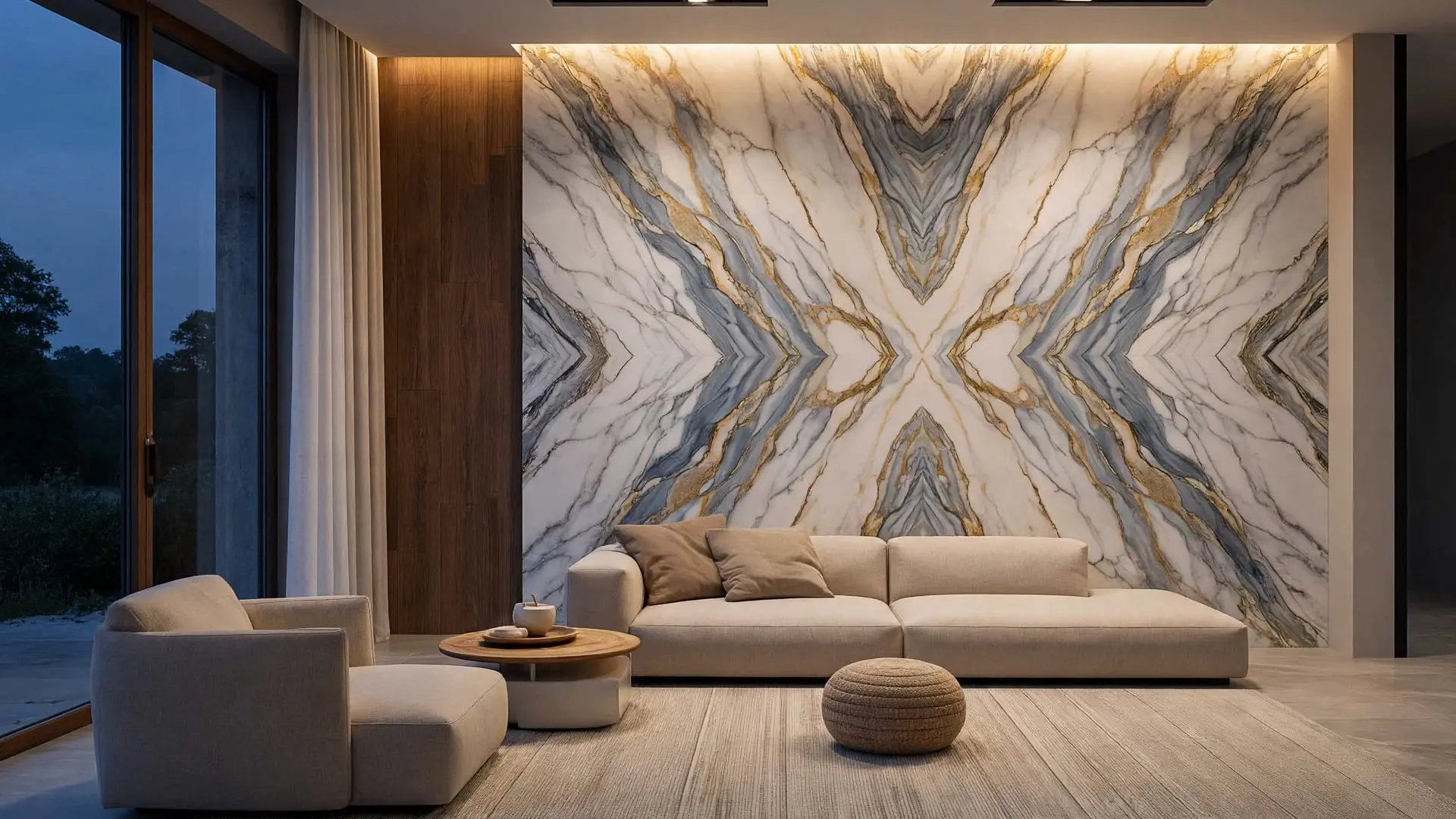
How long do accent wall panels last? In a living room or bedroom, a well made accent wall in a hard composite finish usually keeps its looks for 20 to 25 years. Softer and thinner faces run shorter. The honest answer splits in two, because an accent wall runs on two clocks at once. One clock counts the years until a sheet fails: it loosens, swells, chips through or cracks. The second clock counts the years until the wall stops looking like the feature of the room. On an accent wall, the second clock almost always runs out first.
We are WOW Walls Studio, a South Florida studio. We design and install large-format panel walls. Our hub guide to accent wall panels covers which wall to panel, the finish families and what a project costs. Our general guide to how long wall panels last covers paneling anywhere in a house, material by material. This page stays on the narrower question: one accent wall, in one room, judged against the painted walls around it every single day. That judging is what makes its lifespan different.
Angi, the home services marketplace, puts high-quality paneling at 15 to 40 years before replacement. That range covers paneling in general: full rooms, wainscot runs, hallways, ceilings. A single accent wall lives inside that range, but its position in the range depends on things full-room paneling never faces. One wall takes the sun patch. One wall takes the sofa back and the headboard. One wall carries seams that form part of the design. And one wall gets compared, daily, with fresh paint on both sides of it.
The short answer: lifespan by finish, for one accent wall
TL;DR: A hard marble-look or travertine-look composite accent wall sits at 20 to 25 years of good looks in a living room or bedroom. That band comes from rigid composite data for those rooms. Real-wood veneer runs 20 to 30 years as a structure, with its finish needing care far sooner. WPC fluted panels carry maker claims of 15 to 25 years. Painted MDF runs 10 to 15 years in a dry room. Leather and velvet faces have no published year range from any maker; they age by fading and surface wear, and sun decides their clock.
The table below gives the working ranges this article defends, finish by finish. Every range comes from the sources at the end of the page, and the text under the table says whose range each one is. Generic paneling ranges are labeled generic. Maker claims are labeled maker claims. Nothing in the table is a studio promise, and we offer no lifespan guarantee of our own; we would rather show you whose numbers these are.
| Accent finish or material | Years of good looks, dry living space | What ends it first |
|---|---|---|
| Marble-look or travertine-look composite sheet | 20 to 25 years | Sun fading on the exposed half, seam grime, a chipped corner |
| Porcelain-look composite sheet | 20 to 25 years | Gloss change and fine scratches showing in raking light |
| Real porcelain or ceramic, for scale | 75 years estimated useful life (TCNA, commercial flooring scope) | Grout and joints, long before the tile face |
| Real-wood veneer over a composite or board core | 20 to 30 years | Finish wear at 5 to 8 years for oil finishes, edge chips, water at seams |
| WPC fluted panels | 15 to 25 years (maker claims) | Dust and wear in the grooves, fading on sunlit ribs |
| Painted MDF panels | 10 to 15 years | Water at a cut edge, dents at contact height |
| Leather face | No published range | Sun drying and color drift, scuffs at hand height |
| Velvet or suede-look face | No published range | Pile wear in one traffic lane, sun lightening |
Read the table as appearance life, not survival life. A sheet can still be firmly on the wall late in its second decade. It can already have lost its job as the room's feature. Half of it may have faded a shade lighter than the other half. Protex Flooring, a maker of rigid SPC wall panels (stone-plastic composite: a mineral and PVC core with a decorative face), makes exactly this split in its lifespan guide. Service life and appearance retention are different measures, and a panel can stay attached and sound while its surface picks up scratches and gloss changes. Accent walls live and die by the second measure.
One more honesty note before the detail. No laboratory has published a controlled lifespan study of printed bamboo composite accent sheets, the product family our studio installs. The closest published analogues are rigid SPC panels and generic paneling, and the ranges above lean on those sources, attributed as such. Where a maker publishes a number for its own product, we say so. Where nobody publishes a number, as with leather and velvet, the table says that too, instead of filling the gap with a guess.
Two clocks: the sheet fails, or the feature fades
TL;DR: Every accent wall runs a structural clock and an appearance clock. Structural failure means a sheet loosens, swells, delaminates or cracks. Appearance failure means the wall still stands but no longer reads as the feature: a faded patch, a dark seam line, a worn lane at sofa height. Appearance failure arrives first on almost every accent wall, often years before any sheet is in trouble.
Full-room paneling hides its aging. When four walls wear at the same rate, the eye reads the whole room as slightly older and moves on. An accent wall gets no such mercy. It sits between painted walls that get refreshed on a painter's cycle. Angi puts a fresh coat of paint at every three to five years, and wallpaper at around 15 years. Each repaint next door resets the comparison: the painted walls look new again. Any drift on the accent wall, a half shade of fade, a seam line holding grime, stands out against them. Owners rarely say "my panel failed." They say "the wall looks tired." Tired is an appearance verdict.
The structural clock still matters, and it runs on the usual suspects. Water behind the sheet, a bond that lets go, movement that opens a seam, an impact that chips through to the core. Those failures are covered in the sections on seams and knocks below. But plan around the appearance clock when you choose a finish. Ask not only "how long will this sheet last?" Ask "how long will this face hold its color. Its gloss and its pattern match in this room, under this window?" The second question is the one your room will actually grade.
This is also why the wide generic ranges mislead accent buyers. A range of 15 to 40 years for high-quality paneling folds together sheltered bedrooms and busy hallways, north light and west light, full rooms and single walls. Your accent wall has one specific sun load, one specific traffic pattern and one specific humidity story. The sections below take those one at a time, because each one moves the same finish years up or down its range.
Sun on one wall: the fade clock
TL;DR: Sunlight is the fastest appearance clock on an accent wall, because the sun patch lands on one wall and often on only part of it. Fading research reported from BRANZ Bulletin 566 splits the causes at about 40 percent ultraviolet light. About 25 percent visible light and about 25 percent heat, with the rest from other factors. A printed face can fade in a visible patch while the shaded half keeps its original color. That patch, not sheet failure, is what ends most sunlit accent walls.
Picture the standard Florida living room. Sliders or a wide window on one side, the accent wall opposite or beside the glass. A sun patch that crosses the wall for a few hours a day and parks on the same two sheets. The rest of the room gets diffuse light. The accent wall gets a beam. Over years, the beam writes itself onto the face. The exposed sheets lighten or shift tone, the covered sheets, behind a tall plant, a bookcase, the television, keep the original color. Move the furniture at year six and the wall shows you a map of where everything stood.
Protex states the mechanism plainly for decorative films. Prolonged sunlight exposure can cause fading in films with inadequate light resistance, creating visible color differences between exposed and shaded areas. That sentence describes the accent wall problem exactly. An accent wall is the one surface where an exposed half and a shaded half sit side by side. They sit in a single design. On a book-matched marble-look wall, where two sheets mirror one pattern, a tone split between the pair breaks the match the design was built on.
Wood faces shift too, and not always toward pale. BuildMat Insight, in its durability analysis of wood panel accent walls, notes that all wood species react to ultraviolet light. The reaction is not uniform: some species lighten and wash out, others darken and amber. A real-wood veneer accent wall in a sun patch can therefore drift in either direction, and drift unevenly, sheet by sheet, depending on where the light lands. The veneer itself may be sound for decades while its color walks away from the sample you approved.
Leather sits at the sensitive end of this section. ArtePura, a maker of leather wall panels, advises owners to avoid direct exposure to the sun and heat sources, which could alter its appearance over time. Sun dries a leather face as it fades it, and a dried face cracks at flex points and edges. Velvet and suede-look faces lighten in the patch as well, and pile that has lightened cannot be dyed back to match its shaded neighbor in any reliable way.
Three habits slow the fade clock, and none of them is exotic. First, know your wall's sun hours before you choose the finish. A west-facing accent wall that takes direct sun every afternoon is a hard post for saturated colors and for leather. An easy one for pale stone-look faces, where a small shift barely reads. Second, window film or sheer treatments on the glass cut the ultraviolet share of the load. The fading literature is clear that film reduces fading but cannot eliminate it, since visible light and heat keep working. Third, keep one spare sheet from the original production run if your installer can supply it. A replacement sheet fitted years later will differ slightly from its sun-aged neighbors, yet a same-run spare starts far closer than a new production batch. The spare does not stop fading. It gives you a repair option that does not force a whole-wall decision.
Knocks and contact: the traffic clock
TL;DR: An accent wall collects contact at predictable heights. Sofa backs and headboards rub it, hallway accent walls take bags and shoulders, entry walls take keys and vacuum cleaners. Protex gives commercial corridors, the highest-contact setting it rates, 10 to 15 years against 20 to 25 for living rooms and bedrooms. Your home sits between those poles, and the contact lane on your one wall sets where.
Paneling in general spreads its wear across a room. An accent wall concentrates wear in lanes. The lane behind a sofa gets a long rub line at back height, plus the scuffs of cushions pushed back a thousand times. The lane beside a bed takes headboard contact and the knocks of bedside objects. A hallway or entry accent wall, chosen because it is the first thing guests see. Takes handbags, backpacks, dog leads, delivery boxes and the corner of every picture frame carried past it. None of this threatens the sheet's structure for a long time. All of it marks the face, and on a feature wall a mark is a headline.
Hard composite faces handle contact best. A stone-look or marble-look sheet shrugs off the rub lane for years, showing at most a gloss change where fabric polishes it daily. Is one reason the SPC data puts quiet residential rooms at 20 to 25 years. Move the same face into a corridor pattern of repeated impacts and the rating drops to 10 to 15 years in the Protex table. With chipped edges and visible surface wear as the named causes. The lesson transfers directly: an entry accent wall in a busy household should be budgeted at the lower half of its finish range. A bedroom accent wall at the upper half, even when the sheet is identical.
Softer faces mark sooner and repair worse. A leather face scuffs at hand height and beside switches, and a scuff on leather is a texture change, not a dirt mark; it does not wipe away. Velvet pile crushes in the rub lane behind a sofa and stands back up only partly, leaving a pale track that reads in raking light. Fluted WPC ribs take knocks on their outer edges, the exact line that catches the light, so a chipped rib shows as a bright notch in the rhythm. Veneer chips at edges and corners, exposing the core line under the wood skin. MDF dents, and a painted MDF dent can at least be filled and repainted. Is the one repair advantage painted faces hold over every printed or natural face in this article.
Placement is the cheapest protection. Keep the softest finishes, leather and velvet, on walls with no furniture pressed against them and no pass-by lane. The wall behind a bed, with contact only from pillows, outlasts the same face in an entry by years. Put hard composite faces where life actually touches the wall. And leave a small gap between furniture backs and the wall where you can. A sofa floated even slightly off the face ends the daily rub that polishes and abrades it.
Seams: where an accent wall ages first
TL;DR: On a single feature wall, seams are part of the design, landing every 4 feet on a large-format run, so seam aging reads as design aging. Seams collect grime lines, catch raking light when one sheet lifts a fraction, and split the sun patch into a visible before-and-after. A wall whose seams stay tight, clean and flush keeps its looks. A wall with one lifted or darkened seam looks old at a fraction of its sheets' age.
A seam is the narrow join where one sheet meets the next. On our studio's large-format sheets, 48 by 108 inches and 5 mm thick. The vertical seams land 4 feet apart, with the pattern, book-matched veining or a travertine drift, flowing across them. The design intent is that you read the wall as one surface with a quiet rhythm. Anything that makes a seam louder, dirt, shadow, a lifted edge, a tone step between two sheets, breaks that read.
Grime arrives first. A hairline seam traps dust and cleaning residue along its length, and on a smooth pale face the line darkens year by year. Our guide to cleaning accent wall panels gives seams their own pass for this reason. Brush them dry, then draw a barely damp cloth along each one, never flooding the join. A flooded seam is the second aging path. Water pushed into a join can reach the core or the bond line. On board-cored panels the edge is the fastest route for moisture to swell the sheet. The face can look perfect while the seam quietly thickens.
Light does the rest. Raking light, light traveling nearly parallel to the wall from a side window, turns a fraction of lift at one seam into a long shadow line. The same light shows a tone step where the sun patch ended mid-sheet. This is why two accent walls of the same age can look a decade apart. The one with tight seams and even light still reads as one surface, while the other reads as separate sheets with separate histories.
Installation quality decides much of the seam clock before the wall is a day old. Sheets acclimated to the room, a flat substrate, correct adhesive coverage and expansion room at the perimeter keep seams closed through Florida's humidity swings. Our accent wall panels and Florida humidity guide covers what this climate does at joins and edges. When you judge an older accent wall, judge the seams first: they tell you whether the wall has five good years left or is already spending them.
Lifespan by finish: the six faces of an accent wall
TL;DR: Marble-look and travertine-look composite faces hold their looks longest among the studio finish families, at 20 to 25 years in quiet rooms. Because the face is hard, the pattern hides small marks and pale stone tones forgive slight fade. Veneer lasts as a material for 20 to 30 years but asks for finish care on a 5 to 8 year cycle if oiled. WPC fluted panels carry 15 to 25 year maker claims. MDF runs 10 to 15 dry years. Leather and velvet trade raw years for texture, and sun exposure, not time, sets their limit.
Marble-look composite. The marble-look face is a printed or coated design over a composite core; our marble-look wall panels guide covers the family in full. Its lifespan evidence comes from the rigid composite data used above. 20 to 25 years of residential appearance life in living rooms and bedrooms. 15 to 25 in kitchens and bathrooms where joint seals and moisture behind panels become the risk. Book-matched veining adds one accent-specific catch: the design is a mirrored pair, so any tone drift between the two halves shows as a broken match. In even, indirect light the pair ages together and the wall holds its looks at the top of the range. Under a hard sun patch that covers one half only, expect the appearance clock to run faster than the sheet clock by years.
Travertine-look composite. Travertine-look faces share the composite core and the same 20 to 25 year residential band, and they forgive more than marble-look. The matte, pitted stone pattern hides fine scratches, dust film and small tone shifts that a polished marble design would announce. Real travertine stone, for scale, is a generations-long material when properly installed and maintained. The look face on a composite sheet does not inherit the stone's century, it inherits the composite's decades. Our travertine accent wall panels guide covers where this finish earns its keep. For a sunlit or high-contact accent wall, this is often the longest-looking face per dollar in the studio range.
Real-wood veneer. Veneer is a thin layer of real wood over a core, and its numbers come in two layers of their own. BuildMat Insight rates engineered veneer accent walls at 20 to 30 years as installations, with delamination, edge chipping and moisture swelling at seams as the named vulnerabilities. The finish on the wood runs a shorter cycle. Hardwax oil finishes need a maintenance coat at 5 to 8 years on vertical surfaces. While factory UV-cured polyurethane finishes are rated at 15 to 25 years on vertical applications. Read that as: a veneer accent wall is a 20 to 30 year wall whose face asks for one or two planned acts of care along the way. Our veneer wall panels guide covers the family. Skipping the oil cycle does not kill the wall. It leaves the face dry, pale and thirsty-looking in the contact lane, which on an accent wall is failure enough.
Leather and velvet faces. These are the texture faces, covered in our leather and velvet wall panels guide. No maker publishes a year range for them, and this article will not invent one. Their aging is governed by exposure, not by the calendar. Leather kept out of direct sun holds its character for a long service life. Dust it dry and keep it away from heat. It ages toward a patina that many owners value. The same face in a sun patch dries, drifts in color and can crack at edges. Velvet keeps its looks where nothing rubs it and light stays even. It loses them first in one rub lane or one sun stripe, and neither loss can be blended away. Choose these faces for protected walls, behind a bed, in a dining room away from the glass, and their effective life is long. Choose them for a west-facing entry wall and no honest range exists, because the exposure, not the material, is in charge.
WPC fluted panels. WPC means wood-plastic composite, wood flour and polymer formed into profiled boards; the fluted form carries vertical ribs, covered in our fluted wall panels guide. Senyu, a WPC cladding maker, states the long service life of WPC cladding as 15 to 25 years depending on product tier and exposure. That maker-claim band is the one we use. Two accent-specific notes apply. The grooves collect dust along every channel, so the wall's looks depend on a light but regular dusting habit. A neglected fluted wall reads dirty years before it reads worn. And the ribs present their edges to the light, so fading shows as a softening of the rib shadow contrast rather than a flat patch. Is a gentler failure than a split book-match. Indoors, away from weather, a fluted accent wall at the middle of its maker band is a reasonable planning figure.
Painted MDF. MDF is medium-density fiberboard, wood fibers bonded with resin, usually painted or wrapped as an accent product in molding and board designs. Woodworking Advisor puts standard MDF at 10 to 15 years indoors with normal use, and moisture-resistant grades higher, at 15 to 20 years. The accent-wall catch is water and dents. A cut edge left unsealed near a bathroom door or a kitchen splash zone can swell in a small fraction of that span. MDF takes dents at contact height that composite faces shrug off. Its compensating virtue is renewal: a painted MDF accent wall can be filled, sanded and repainted in place. Resetting its appearance clock in a weekend, something no printed, veneer, leather or velvet face allows. Judged on first-life appearance, MDF is the shortest hard option here. Judged on total service with one repaint, it competes well.
The Florida adjustment
TL;DR: Florida shortens every clock in this article at the edges: humidity works on seams, cut edges and bonds. Strong sun loads the fade clock for more hours a year. The US Environmental Protection Agency advises reducing indoor humidity to 30 to 60 percent to decrease mold growth, and calls moisture control the key to mold control. A composite accent wall in a conditioned Florida home holds its range; the same wall in a home left humid for long stretches spends its years faster.
South Florida homes swing between deep air conditioning and, in homes left closed or under-conditioned, long humid stretches. Panels feel that swing at their weakest points. A composite sheet's face is indifferent to humidity, but its seams, its cut edges and the wall behind it are not. Moisture that reaches the back of an installation, from a plumbing leak. A slider track or condensation on a cold exterior wall, attacks the bond and the substrate while the face still looks new. This is the one failure in the article that can end a wall suddenly rather than gradually. A damp smell or a soft spot at the base of an accent wall deserves a look behind the sheet. It does not deserve a coat of cleaner on its face.
Sun is the second Florida factor, and it is a matter of hours. The fade clock runs whenever the patch is on the wall, and South Florida delivers long, bright days for most of the year. A finish choice that would coast in a northern bedroom, a saturated veneer, a leather face, spends its appearance budget faster here. Pale stone-look faces, matte finishes and walls that take morning rather than afternoon sun hold their looks longest in this climate. None of this makes accent panels a poor Florida choice. The composite families were effectively built for it, since the face cannot rot, swell or feed mold the way paper and raw fiber faces can. It means the Florida buyer should weight sun and seam protection higher, and the generic northern ranges lower, than a buyer elsewhere.
Repair, refresh or replace: reading an aging accent wall
TL;DR: Read an aging accent wall in order: seams, then sun patch, then contact lane. A grime-dark seam is a cleaning job. A lifted seam or swollen edge is a repair job, done early. A tone split across a book-matched pair or a crushed velvet lane is an appearance verdict that cleaning cannot reverse. The honest options are living with it, replacing the affected sheets if a close match exists, or re-facing the wall.
Start with what care can reverse. Dust film, seam grime and fingerprint zones are maintenance, and our cleaning guide linked above covers the routine, including the seam pass. A hardwax-oiled veneer face that has gone pale and dry is a scheduled maintenance coat, the 5 to 8 year cycle doing its normal work, not a failure. A painted MDF wall with dents and scuffs is a fill-and-repaint weekend. These are the cheap years of an accent wall's life, and they buy back most of its looks.
Then separate the repairs that stop a small problem becoming a wall problem. One lifted seam edge, caught while the sheet is sound, is an installer's short visit. The same lift left through two humid summers can become a swollen edge and a failed bond across a whole sheet. A chip at a corner, sealed early, stays a chip; left open on a board core, it becomes the entry point for the moisture that swells the corner. Early repair is where the structural clock is won.
What care cannot reverse is a color or texture split. A sun-faded half and a shaded half will not reunite under any cleaner. A crushed pile lane will not stand back to match. A book-match broken by drift stays broken. At that point the decision is economic and aesthetic, and it is the same decision our wall panel care. Cleaning and repair guide frames for panel walls in general. Repair while the damage is local and a matching sheet exists, replace the wall when the appearance failure is the design itself. Keeping the original run's spare sheet, mentioned in the sun section, is what keeps the first option open.
Habits that move a wall to the top of its range
TL;DR: The habits are short and dull, which is why they work: control the sun patch with film or sheers. Keep indoor humidity in the EPA's 30 to 60 percent band. Dust faces and fluted grooves before grit builds, clean seams as their own pass without flooding them, float furniture a small distance off the face. Do the one planned finish care your face asks for, an oil coat for oiled veneer at 5 to 8 years.
None of these habits costs real money, and together they are the difference between the bottom and the top of every range in this article. The sun habit comes first because fade is the only damage here that no repair can undo. Film or sheers on the glass that feeds the patch, chosen when the wall goes in, protect the wall for its whole life. The humidity habit protects the parts you cannot see: the bond, the edges and the wall behind. The EPA's guidance was written about mold, and it doubles as panel guidance. Since the same moisture that feeds mold is the moisture that swells edges and loosens bonds.
Cleaning habits protect the face from its owners. Grit dusted off dry cannot scratch; grit dragged under a wet cloth can. Abrasive pads and strong solvents dull printed and coated faces in a single session, a self-inflicted appearance failure at year one on a wall rated for two decades. The contact habit, a small gap behind the sofa, a pad under the headboard, ends the daily rub that no finish fully resists. And the finish habit, doing the veneer oil coat on schedule, treating leather as the ArtePura guidance directs. Away from sun and heat, dusted dry, keeps the natural faces aging toward character instead of toward damage.
What a lifespan is worth: cost per year on one wall
TL;DR: Spread over an appearance life of 20 to 25 years, even a full turnkey accent wall costs a few hundred dollars per year of feature-wall service. The studio's public starting points are a stock design from $850. A semi-custom project at $2,200 to $2,700 and a full turnkey project from $9,999, all preliminary until a specialist measures your wall. A painted wall beside it needs a fresh coat every three to five years on Angi's figures. The panel wall's stillness is part of what you are buying.
Run the simple version of the math. A stock design from $850 that holds its looks for even the lower composite band returns its cost many times over in repaint cycles avoided. A full turnkey project from $9,999, at 20 years of appearance life. Works out near five hundred dollars a year for the room's defining surface, with no repaint weekends inside that span. These are illustrations from the studio's three public price anchors, and the anchors are preliminary. A specialist confirms the real figure after seeing the wall, its size and its condition. The lifespan ranges in the math are the sourced ranges from this article, not studio promises.
The comparison that matters is the wall you would otherwise repaint. Paint is cheaper per event and shorter per event, at three to five years a coat on Angi's figures. Each coat also re-exposes the comparison problem in reverse: fresh paint beside an aging accent wall is what makes the accent wall look old. Owners who plan to refresh a room's paint twice a decade should choose the accent finish for fade resistance first. Because that finish will be graded against new paint for its whole life. Owners who rarely repaint can let texture faces, veneer, leather and velvet, compete on equal terms.
Frequently asked questions
TL;DR: The short answers: a composite accent wall keeps its looks for 20 to 25 years in a quiet room. Sun and seams decide whether yours lands high or low in its range. No maker publishes a year range for leather or velvet faces. The eight answers below give the detail behind each of those points.
How long do accent wall panels last in a living room?
In a living room, a hard composite accent wall in a marble-look or travertine-look finish keeps its looks for 20 to 25 years. Drawn from Protex Flooring's rigid composite data for residential living rooms and bedrooms. Veneer installations are rated at 20 to 30 years with finish care along the way. WPC fluted panels carry maker claims of 15 to 25 years, and painted MDF runs 10 to 15 years in a dry room.
What makes an accent wall wear out faster than other paneling?
Concentration. One wall takes the sun patch, the furniture contact and the daily comparison with freshly painted walls beside it. Full-room paneling spreads the same wear across four walls and ages evenly, so nobody notices. An accent wall can look finished years before any sheet on it has structurally failed.
Does sunlight really shorten an accent wall's life?
Yes, on the appearance clock, which is the clock that matters for a feature wall. Fading research reported from BRANZ Bulletin 566 attributes about 40 percent of fading to ultraviolet light, about 25 percent to visible light and about 25 percent to heat. Protex notes that prolonged sunlight can fade decorative films and create visible color differences between exposed and shaded areas. A feature wall displays both areas side by side.
How long do WPC fluted accent panels last?
Maker claims put WPC cladding service life at 15 to 25 years depending on product tier and exposure, with Senyu stating that band directly. Indoors, the practical limits are dust held in the grooves and knocks on the rib edges. A fluted wall that is dusted regularly and kept out of the hardest sun should plan around the middle of the maker band.
How long does a real-wood veneer accent wall last?
BuildMat Insight rates engineered veneer accent walls at 20 to 30 years as installations. The finish sets the maintenance rhythm inside that span. Hardwax oil needs a maintenance coat at 5 to 8 years on vertical surfaces, while factory UV-cured polyurethane finishes are rated at 15 to 25 years. Water at seams and edge chips are the named risks to watch.
Is there a lifespan figure for leather or velvet accent panels?
No published one. No maker we found states a year range for leather or velvet accent faces, so this article gives none. Their life is set by exposure: leather maker ArtePura advises keeping leather walls away from direct sun and heat. Alter appearance over time, and velvet loses its looks first where pile is rubbed or sun strikes one stripe of the wall.
When should an accent wall be replaced rather than repaired?
Replace when the failure is the design itself. A tone split across a book-matched pair, a crushed or faded lane that cleaning cannot lift, or damage spread across several sheets with no matching spare. Repair while the problem is local, one lifted seam, one sealed chip, one veneer face due its oil coat. A single early repair visit is what keeps a wall off the replacement path for years.
Do accent wall panels come with a lifespan guarantee from WOW Walls Studio?
No, and be wary of any installer who offers one in years. Lifespan figures in this article come from the published sources listed below, including Angi and panel makers. They describe materials in general settings, not a promise about a specific wall. What decides your wall's years is its finish, its sun load, its seams and its care, which is why we show the ranges with their sources attached.
Sources
- Angi, How Much Does It Cost to Install Wall Paneling: high-quality panels typically last 15 to 40 years before needing replacement. angi.com
- Angi, Pros and Cons of Wallpaper vs Paint: wallpaper lasts around 15 years with minimal maintenance, while painted walls need a fresh coat every three to five years. angi.com
- Protex Flooring, SPC Wall Panel Lifespan: the typical SPC wall panel lifespan is 10 to 25 years. Residential living rooms and bedrooms sit at 20 to 25 years. Commercial corridors sit at 10 to 15 years. Service life is distinguished from appearance retention. Prolonged sunlight can fade decorative films unevenly. protexflooring.com
- BuildMat Insight, Wood Panel Accent Wall Durability: engineered veneer accent walls at 20 to 30 years. Hardwax oil runs 5 to 8 years before a maintenance coat. Factory UV-cured polyurethane runs 15 to 25 years on vertical applications. Ultraviolet reactions differ by species. buildmatinsight.com
- Senyu WPC, WPC Wall Cladding: maker claim of a long service life of 15 to 25 years depending on product tier and exposure. senyu-wpc.com
- Woodworking Advisor, How Long Does MDF Last: standard MDF lasts 10 to 15 years indoors with normal use, with moisture-resistant grades at 15 to 20 years. woodworkingadvisor.com
- Comfort Pro, Best Ways to Block UV and Reduce Fading, reporting BRANZ Bulletin 566: ultraviolet radiation about 40 percent of fading. Heat accounts for about 25 percent. Visible light accounts for about 25 percent. Other factors account for about 10 percent. comfortproca.com
- ArtePura, FAQ: leather walls should avoid direct exposure to the sun and heat sources, which could alter appearance over time. artepura.design
- US Environmental Protection Agency, Ten Things You Should Know About Mold: the key to mold control is moisture control. Indoor humidity should be reduced to 30 to 60 percent to decrease mold growth. epa.gov
- Tile Council of North America, 2023 Life Cycle Cost study: porcelain and ceramic tile carry a 75 year estimated useful life in the study's commercial flooring scope. cdn.ymaws.com
- WOW Walls Studio, Accent Wall Panels hub and Wall Panels Cost: studio sheet dimensions, finish families and the three public preliminary price anchors used in the cost section. wowwallsstudio.com